
Organic khadi cotton fabric, hand-spun on centuries-old looms just outside Kolkata, has quietly become one of the most trusted inputs in Japan’s fashion supply chain. Long before “sustainable sourcing” appeared on a single mood board, Bengal’s weavers were already practicing it thread by thread, loom by loom. Today, Svarna Textiles Ltd is the bridge connecting these handloom clusters to Japanese designers who want provenance, not just polish, and who are willing to travel further up the supply chain to find it. It is a quieter kind of sourcing story, built on relationships with weavers rather than press releases, and it is exactly why it keeps showing up behind the scenes of Japan’s most considered collections.

Order a Svarna Textiles Ltd Swatch Book—Cotton & Linen or Silk—for just $20
→ svarna.com → Request Your Swatch Book Today
Why Japanese Designers Are Quietly Sourcing from Kolkata
Japan’s fashion industry has a reputation for restraint—clean lines, honest materials, and nothing wasted. That philosophy maps almost perfectly onto how Bengal’s weavers have always worked, which is why so many Japanese buyers are now looking past mass mills toward smaller, slower clusters.
• Khadi fabric manufacturers in India hand-spin and hand-weave every meter, producing cloth with no synthetic sizing and near-zero industrial waste—a detail Japanese quality auditors check for closely.
• The best cotton fabric in India from these clusters is fully biodegradable end to end, checking the exact box Japanese circular-fashion buyers are hunting for as regulations tighten.
• Sustainable fabric manufacturers in India working in cooperation now offer the traceability documentation that Japanese buyers require before placing a single order.
• Explore the source directly: Khadi Fabrics Manufacturer.
• See it woven: Svarna: Where textile artistry meets elegance. Handwoven organic clothing!
Linen and Silk: Quietly Expanding the Sourcing Basket
Cotton opened the door, but Japan’s buyers are increasingly asking Kolkata’s clusters for more than khadi alone, and the region is answering with two fibres it has quietly perfected for generations.
• A linen fabric manufacturer in India supplying Kolkata’s clusters offers the same low-water, biodegradable profile that circular fashion demands at a scale Japanese buyers can actually plan around.
• Hand-woven linen fabric carries a texture and drape that mass mills cannot replicate, which is exactly why Japanese designers keep asking for it by name rather than by specification sheet.
• Silk manufacturers in India working with Assam’s muga silk fabric supply a fibre that is naturally circular, with no synthetic intervention and no microplastic shedding once it reaches end of life.
• See the full range: Linen Fabric Wholesale and Special Weaves and Dyeing.
• Watch the artisans: Crafted with Care, Woven with Passion – Celebrating the artisans behind every weave!
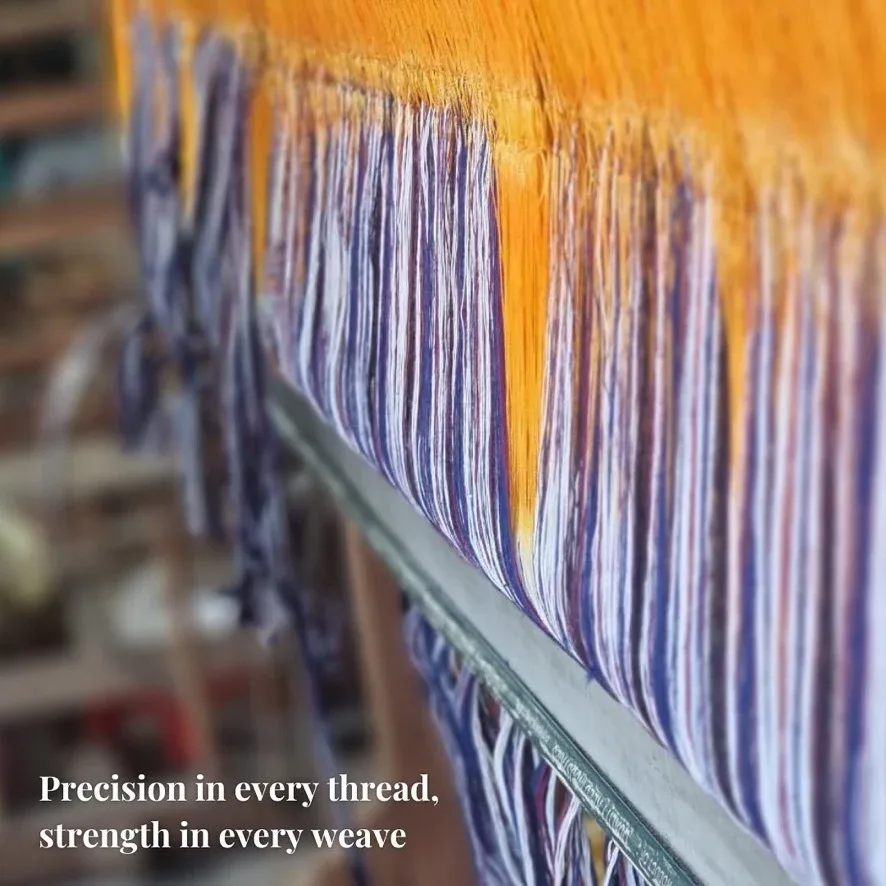
From Village Looms to Export-Ready Global Standards
The real story here isn’t just craft—it’s that Kolkata’s looms have scaled up to meet global demand without losing the qualities that made them worth sourcing from in the first place.
• A cotton fabric exporter working through India’s handloom boards now ships directly to Japanese and European buyers, with full traceability built into every consignment rather than added on afterwards.
• Sustainable fabric manufacturers in India have adopted GOTS and OEKO-TEX compliance, removing the old barrier that once kept village looms out of premium global fashion houses.
• Buyers sourcing different types of cotton fabric for clothing, from crisp khadi to soft mulls, can now order at consistent, export-grade quality without losing the character that drew them to Bengal in the first place.
• Browse the collection: Cotton.
• One more look inside: Each spin, a story woven. This video showcases the meticulous skill and dedication behind every piece.
Conclusion
Japan’s fashion industry didn’t discover sustainability—it recognized it, sitting quietly in the same handloom clusters that have practiced it for generations. From Kolkata’s khadi looms to Assam’s silk cocoons, Bengal’s weavers were building circular fashion long before the term existed on any label. Svarna Textiles Ltd stands at that exact intersection, turning centuries of craft into fabric that Japanese runways, and the buyers behind them, can quietly rely on, season after season.
FAQs
Q: Why is Kolkata handloom fabric relevant to Japan’s fashion industry?
Ans: It offers hand-spun, low-water, fully biodegradable cloth with verified provenance—exactly the profile Japan’s circular fashion sourcing teams are looking for right now.
Q: Can small weaving clusters near Kolkata really export at global standards?
Ans: Yes—many now operate under GOTS and OEKO-TEX compliance, which allows direct, fully traceable export to Japanese and European buyers.
Q: Does Svarna Textiles Ltd supply linen and silk as well as cotton?
Ans: Yes, alongside khadi cotton, Svarna Textiles Ltd sources handwoven linen fabric and muga silk fabric for buyers across global markets.