Japan’s minimalist design houses didn’t opt for any synthetic fiber. Well, this has nothing to do with efficiency or price but minimalism that has all the elements that have earned their place, and nothing can compete with a place that is built through hand-spun or cloth-spinning techniques. That conviction, held for decades in Tokyo, eventually led design buyers to India’s handweaving belt and to Svarna Textiles. Two traditions separated by geography share one instinct: strip away what’s unnecessary and let the material speak.
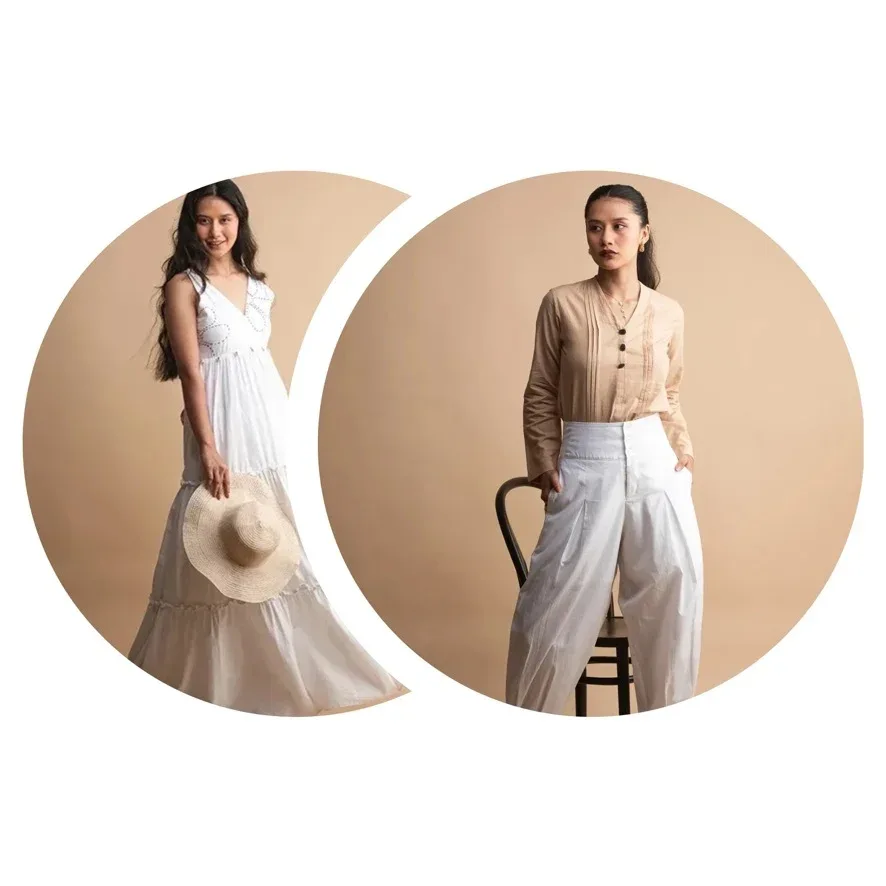
✶ Feel the Cloth Japan’s Minimalists Trust ✶
Order a Svarna Swatch Book—Cotton & Linen or Silk—for just $20→ svarna.com → Request Your Swatch Book Today
Two Philosophies, One Thread
“Why does Japanese minimalism rely on Indian handloom fabric instead of mill cloth?”
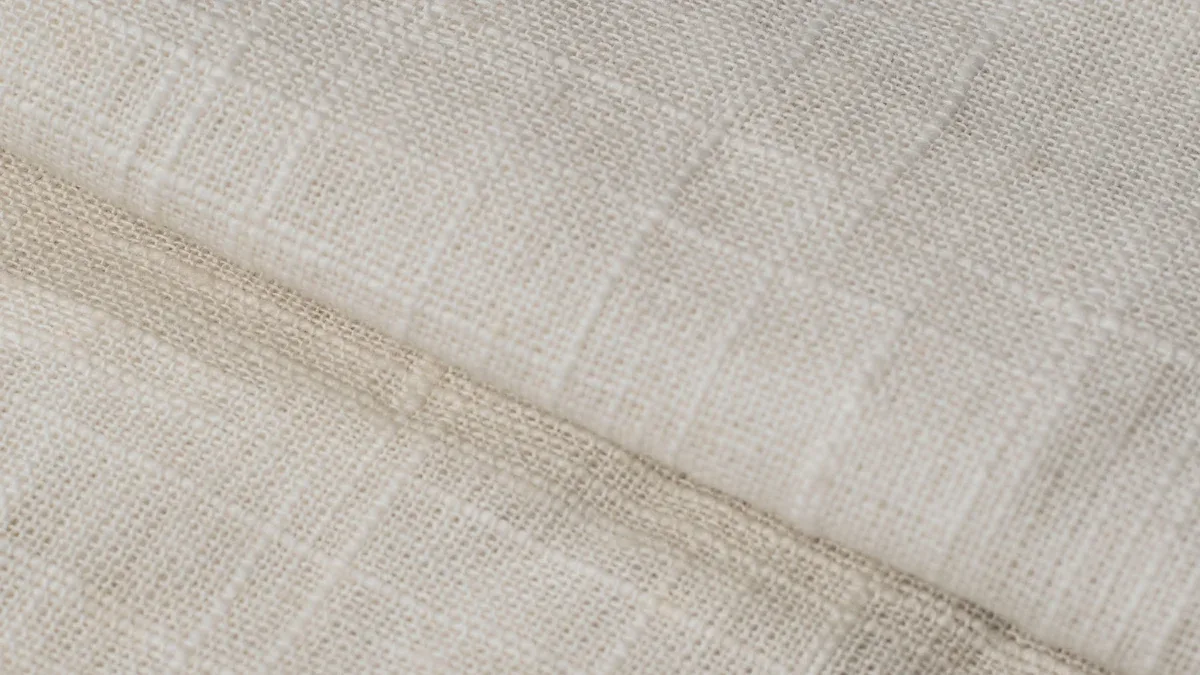
Japanese minimalist design treats the fabric as the entire piece of the statement, with no print or no embellishment, and has nothing to hide away. Therefore, it makes the fiber quality non-negotiable. Whereas mill cloth is made to be uniform entirely by machine, handloom cloth is made to be uniform entirely by hand and has a little bit of irregularity, which proves it is made by humans. For brands built on “less, but better,” that irregularity is authenticity, not a flaw. It’s part of why organic khadi cotton fabric keeps appearing in Japanese sourcing briefs season after season.
Suggestion: Here’s how our hero product is made! Finest textiles, made with love. DM to shop now!
“What makes Indian handwoven fabric different from machine-woven textiles?”
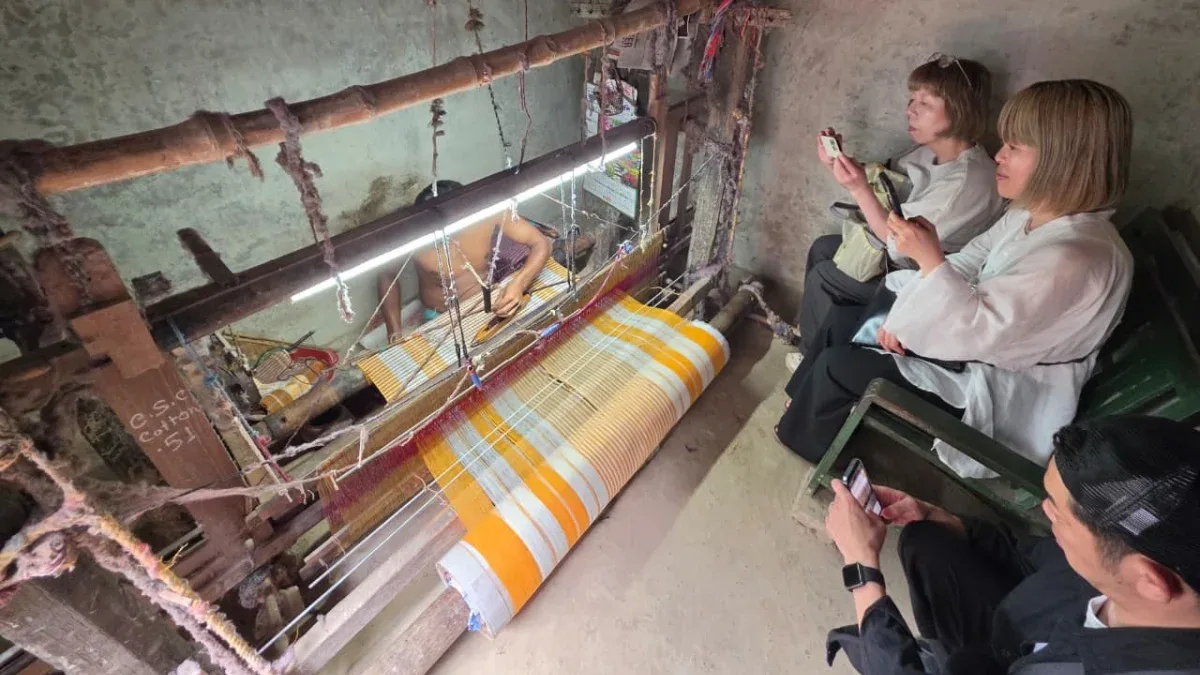
Every handloom pass carries a slight tension variation, as two machines just replicate, whereas in handloom, it cannot repeat and always has variations. Therefore, this showcases two kinds of cloth: one that is machine-made, which just looks plain, and, on the other hand, hand-made, which looks intentional. Among the wider range of Indian cotton fabric types, handwoven ones are the only category that can claim this. It’s why Svarna remains, after 23 years, a trusted cotton fabric exporter for design houses built around restraint.
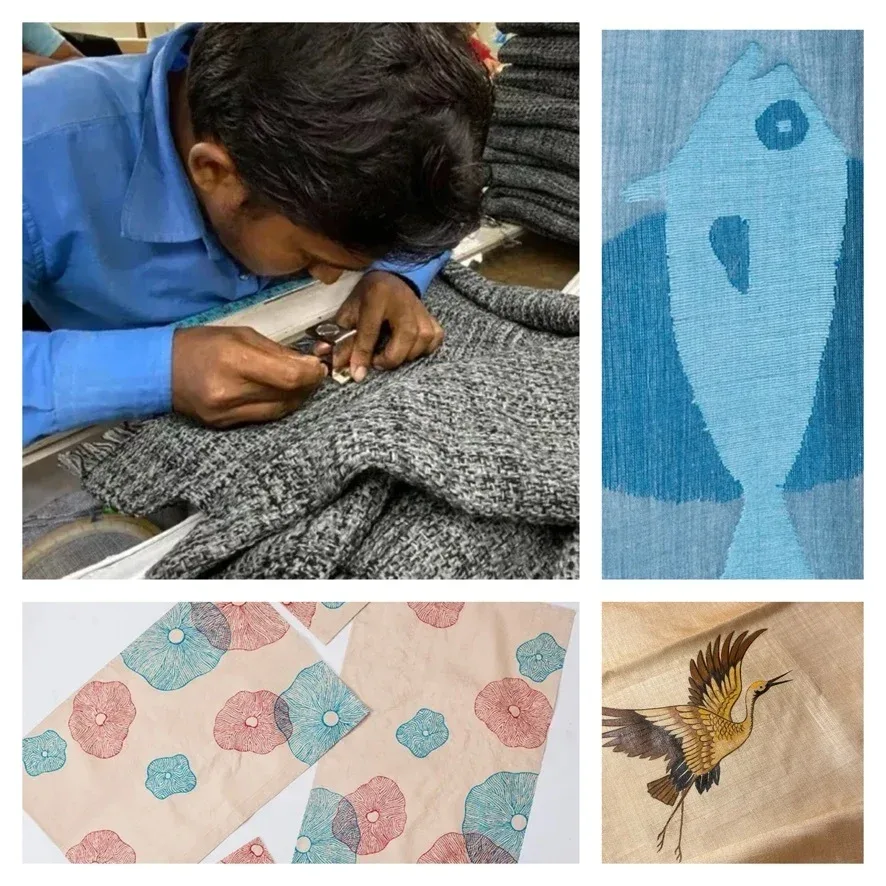
Where Khadi Fits the Minimalist Brief
“Is khadi cotton actually suited to a minimalist wardrobe?”
Yes, almost more than any other fiber. Khadi’s hand-spun yarn has a quiet, matte surface with none of the sheen machine cotton picks up in finishing. For a design language that is based on stillness and matte finishes, quality matters. Svarna is counted among the established khadi fabric manufacturers in India because its khadi holds that texture at export volume, without the corners cut once an order scales.
“Why do Japanese buyers specifically request hand-spun khadi over power loom cotton?”
• Power-loom cotton, however soft, carries a machine-made evenness that is found to be better quality as compared to when it is manufactured manually. Therefore, hand-spun khadi reads as made.
• For a buyer evaluating a khadi cotton manufacturer in India, that distinction shows up under the hand within seconds.
• Korean labels are now learning to look for this distinction, following a trail Japan marked first.
• Read more: Indian Khadi Fabric: Japan’s Top Fashion Choice
Cotton and Linen Carry the Same Logic
“Is khadi cotton good for summer—and does it suit the minimalist brief year-round?”
Yes, and this is where the fabric earns its keep beyond aesthetics. Is khadi cotton good for summer? Categorically. The hand-spun weave helps in building natural air pockets, which milled cotton eliminates to achieve uniformity. The result is a cloth that helps in breathing and also gets softer after every wash, the opposite of every synthetic performance fabric. For a design language that values the body’s ease as much as the eye’s, that makes organic khadi cotton fabric a year-round staple, not a seasonal compromise.
• Svarna’s range represents the best cotton fabric in India for export: consistent texture, verified provenance, and a hand that rewards the minimalist brief.
• Each bolt ships with quality documentation to meet the standards of sustainable fabric manufacturers in India and abroad.
• Minimalist Japanese buyers return for the same reason every season: the best quality cotton fabric doesn’t need reintroduction. It just needs to show up.
•Explore: Indian Khadi Fabric: Japan’s Top Fashion Choice
“Does linen fit Japanese minimalist design as naturally as cotton does?”
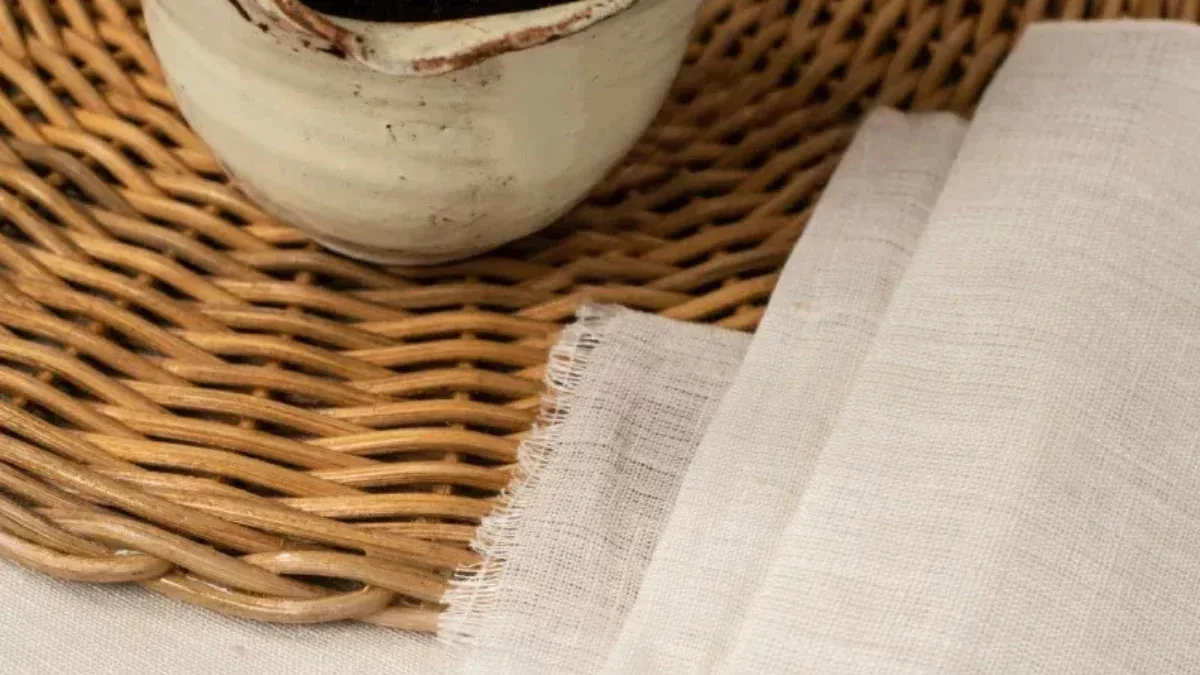
Almost more naturally. Linen creases the moment you sit down in it, and minimalist design has always treated that crease as character, not carelessness. As a linen fabric manufacturer in India, Svarna weaves linen with the same handloom honesty applied to its cotton. The benefits of linen—breathability, a cooling hand-feel, and a fall that softens with every wash—align almost exactly with what minimalist design already values.
• Svarna sits among the more established linen manufacturers in India and linen fabric manufacturers in India serving Japanese and now Korean buyers.
• Linen in India benefits from the same craft infrastructure as khadi, handloom skill, low industrial waste, and a supply chain that stays legible from loom to label.
• Both cotton and linen from Svarna fall under the broader category of handmade textiles—cloth made by people, not processes, which is precisely what minimalist sourcing briefs ask for.
• Further reading: Linen Fabric Manufacturer India: Japan Fashion
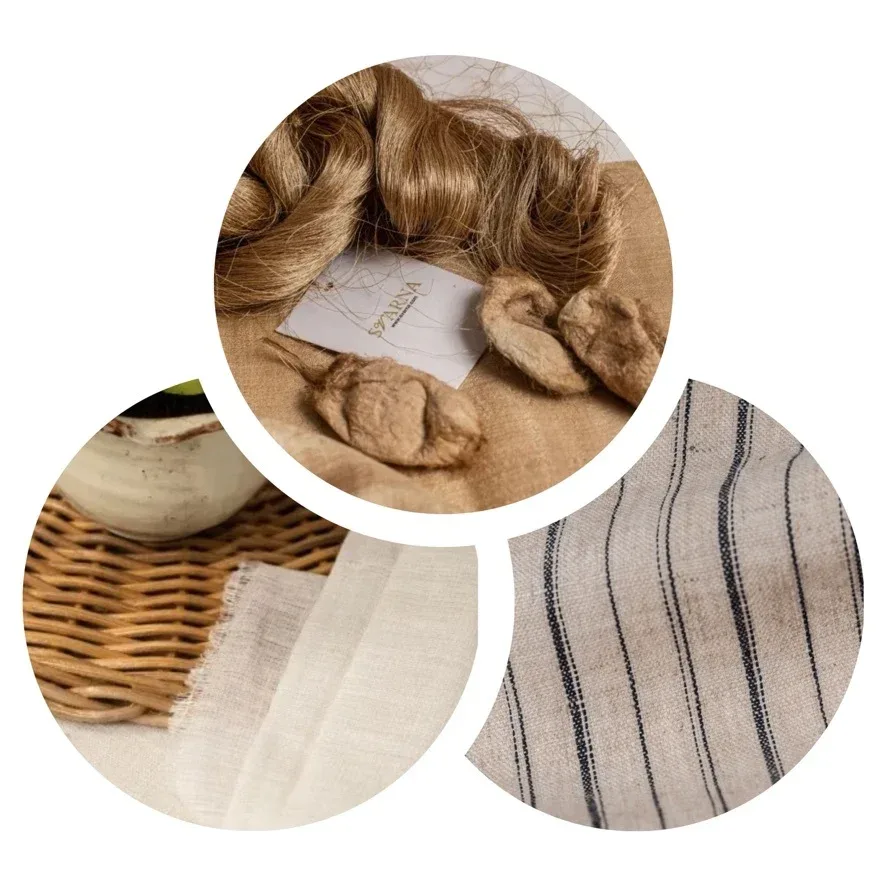
A note on availability: Handloom production was never designed to match mass-market speed — a weaver’s pace sets the ceiling. Brands that plan their season around Svarna’s production calendar get first allocation; those who order late often wait for the next run.
Why Two Design Cultures Keep Meeting on the Same Loom
Japan’s minimalist houses didn’t choose India’s handweaving belt by accident. Brands following that path today, Korean and otherwise, aren’t discovering something new so much as catching up to a decision Japan made decades ago. Linen in India, khadi from Gujarat, and muga silk fabric from Assam share one trait no synthetic alternative can fake: they were made by a person, not a process. The silk manufacturers in India who work with muga have understood this for generations. So do the weavers behind every bolt of organic khadi cotton fabric Svarna ships to Tokyo. For a design philosophy built on subtraction, that’s not a small detail; it’s the entire point.
For any brand, Japanese, Korean, or otherwise, building a wardrobe on restraint rather than noise, the fabric has to do more work, not less. That’s the brief Svarna has answered, on the same looms, for 23 years.
✶ Begin with the Cloth ✶
→ Order a Swatch Book — Cotton & Linen or Silk — $20 svarna.com
→ Request a Custom Fabric Quote — export@svarna.com
→ Explore the Full Fabric Range — svarna.com/fabrics-and-textiles
—Handcrafted. Exclusive. Transformative.
FAQs
Q: Why do minimalist Japanese brands prefer handwoven Indian fabric over synthetic alternatives?
Ans: Because minimalist design relies on the fabric itself to carry the statement, and handloom texture offers an honesty machine-made cloth can’t replicate.
Q: Is khadi cotton good for summer and everyday minimalist wear?
Ans: Yes, its hand-spun weave creates natural breathability that mill cotton can’t match, making it a year-round staple for understated, body-conscious design.
Q: How can a Japanese or Korean brand source Svarna’s handwoven fabric?
Ans: Order a $20 swatch book at svarna.com, or email export@svarna.com for a custom quote and production calendar.