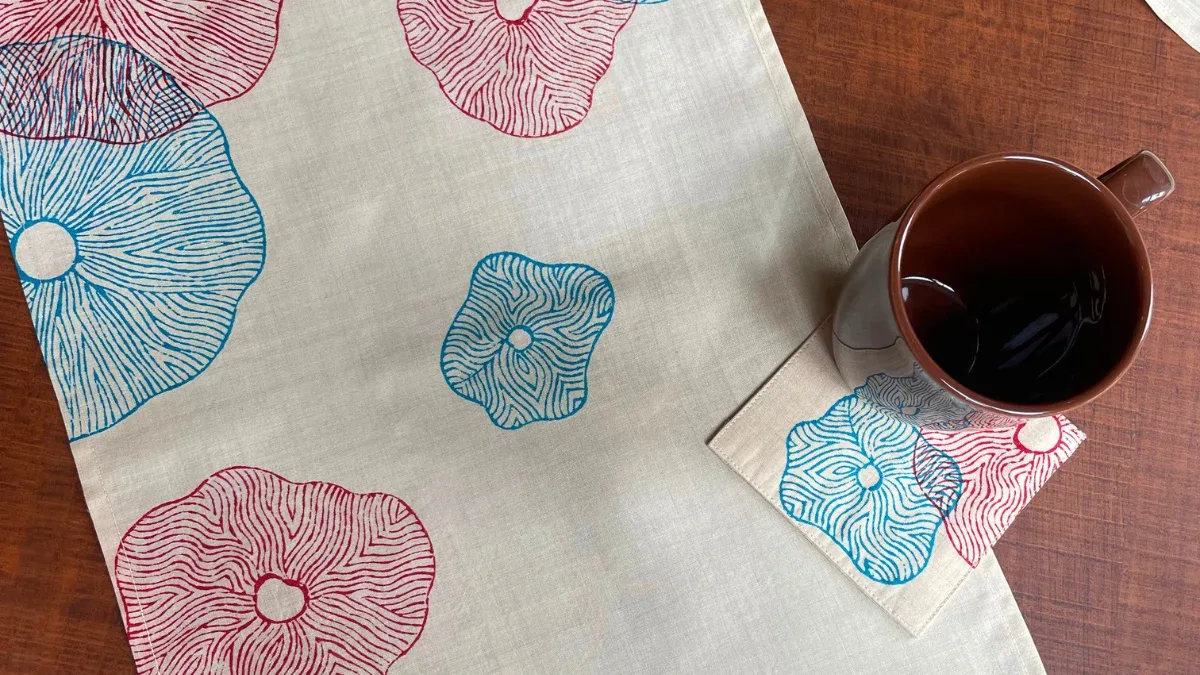
Few fabrics carry as much history as khadi. Once the cloth of India’s freedom movement, it now fills design studios from Tokyo to Seoul. In this guide, we explain what khadi is, how it is made, and why it is trending again, and show how Svarna, one of the established khadi fabric manufacturers in India, has spent 26 years bringing hand-spun cloth from rural India to the world’s most discerning brands.
What Is Khadi Fabric?
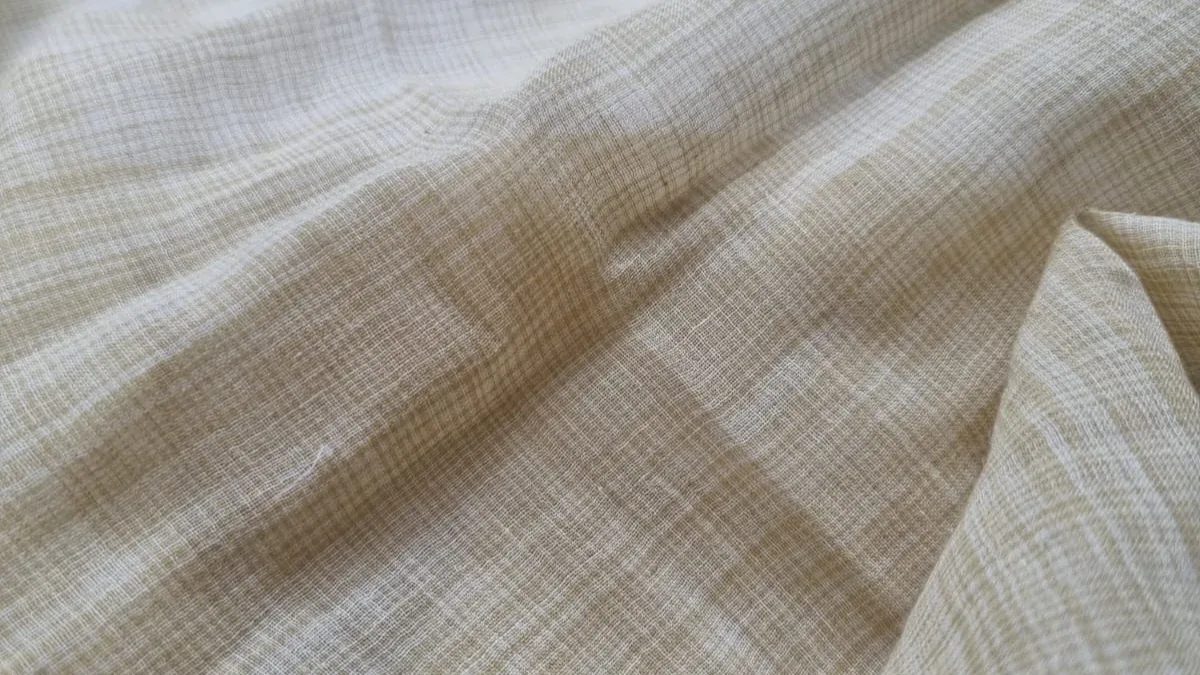
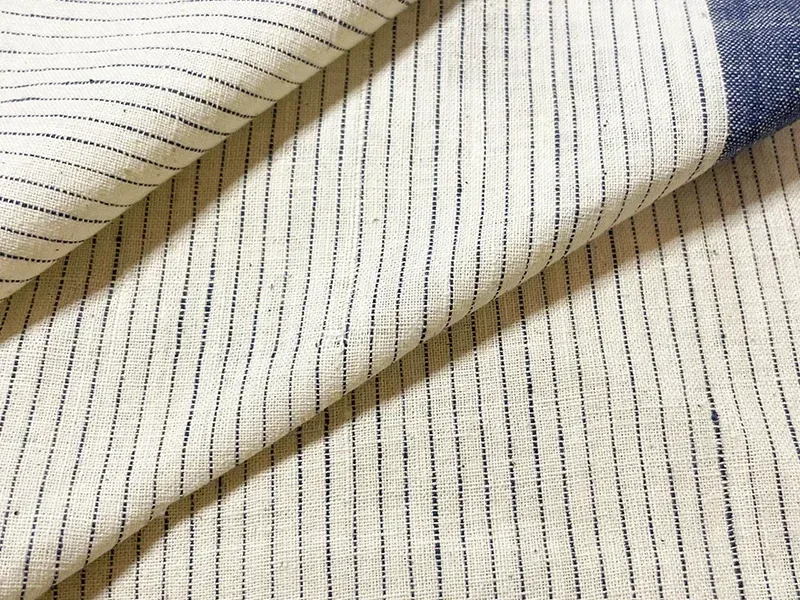
Khadi (or khaddar) is any fabric that is hand-spun and hand-woven. The term describes the process, not the fibre, so khadi can be cotton, silk, or wool, though cotton is most common. Hand-spun yarn is slightly uneven, which gives khadi its soft slubs and makes every bolt unique. The open weave breathes, keeping you cool in summer and warm in winter.
Organic khadi cotton fabric starts with cotton grown without synthetic pesticides or fertilizers and processed without harsh chemicals, making it gentle on both skin and soil.
Check out this post on our LinkedIn, which highlights the khadi essentials:
A Short History of Khadi
India has woven cotton for millennia. Under colonial rule, cheap mill-made cloth undercut local weavers, and in the 1920s Mahatma Gandhi made the charkha (spinning wheel) and khadi symbols of self-reliance.
| Era | Milestone |
| c. 2500 BCE | Cotton textiles in use in the Indus Valley Civilisation. |
| 17th–18th century | Fine Bengal muslins traded across the world. |
| 1920s | Gandhi makes khadi the emblem of the Swadeshi movement. |
| 1957 | Khadi and Village Industries Commission (KVIC) begins supporting artisans. |
| Today | Khadi returns as a global sustainable-fashion fabric. |
Table 1: Key moments in the history of khadi
How Is Khadi Made? The Step-by-Step Process
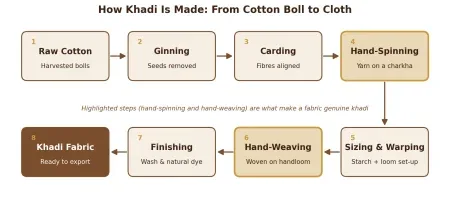
Figure 1: The khadi-making process, from raw cotton to export-ready fabric
Two steps define khadi: hand-spinning and hand-weaving. At Svarna, cotton is spun into yarn on the charkha and woven on traditional handlooms using honed techniques that meet Japanese quality standards. The result is a cloth that is smoother and stronger than typical khadi without losing its handmade character.
Why Khadi Is Trending Again:
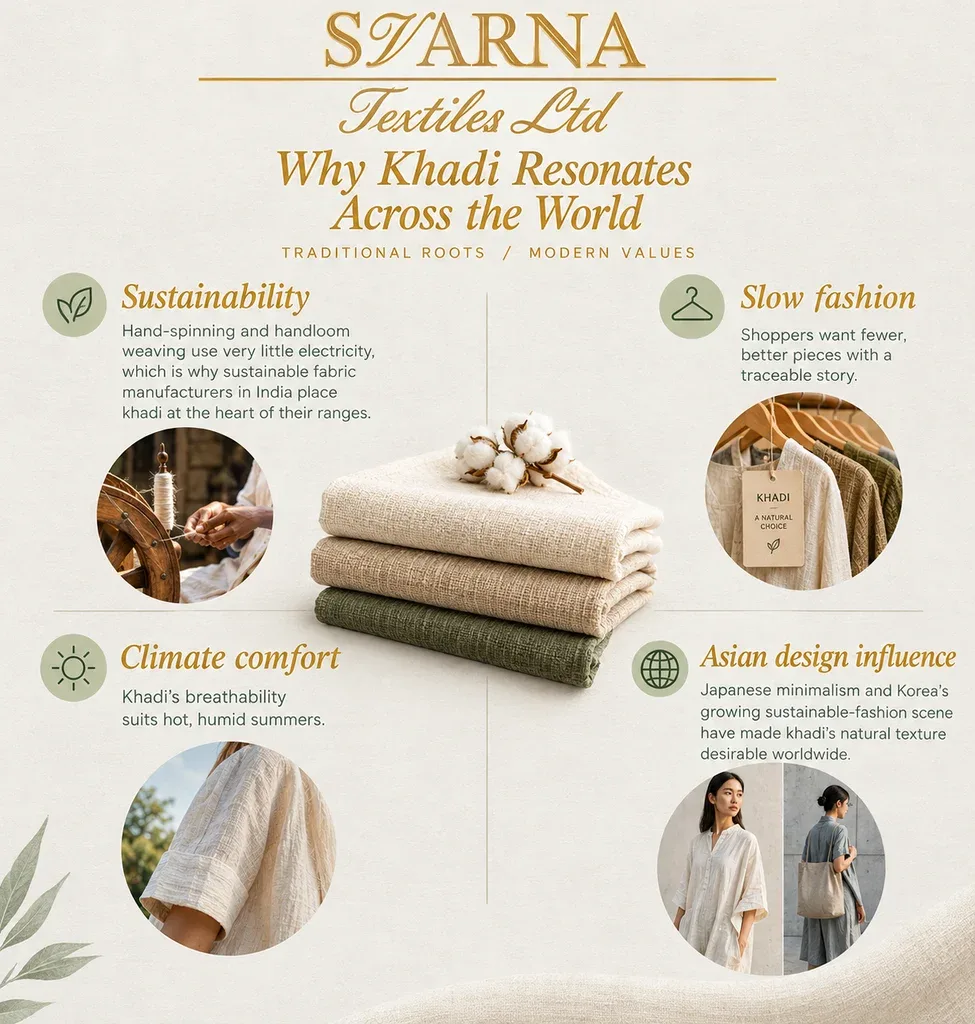
• Sustainability: Hand-spinning and handloom weaving use very little electricity, which is why sustainable fabric manufacturers in India place khadi at the heart of their ranges.
• Slow fashion: shoppers want fewer, better pieces with a traceable story.
• Climate comfort: Khadi’s breathability suits hot, humid summers.
• Asian design influence: Japanese minimalism and Korea’s growing sustainable-fashion scene have made khadi’s natural texture desirable worldwide.
Why Svarna Stands Out Among Khadi Fabric Manufacturers in India
Plenty of mills sell “khadi-look” cloth. Svarna’s difference lies in who makes it, where it comes from and who trusts it.
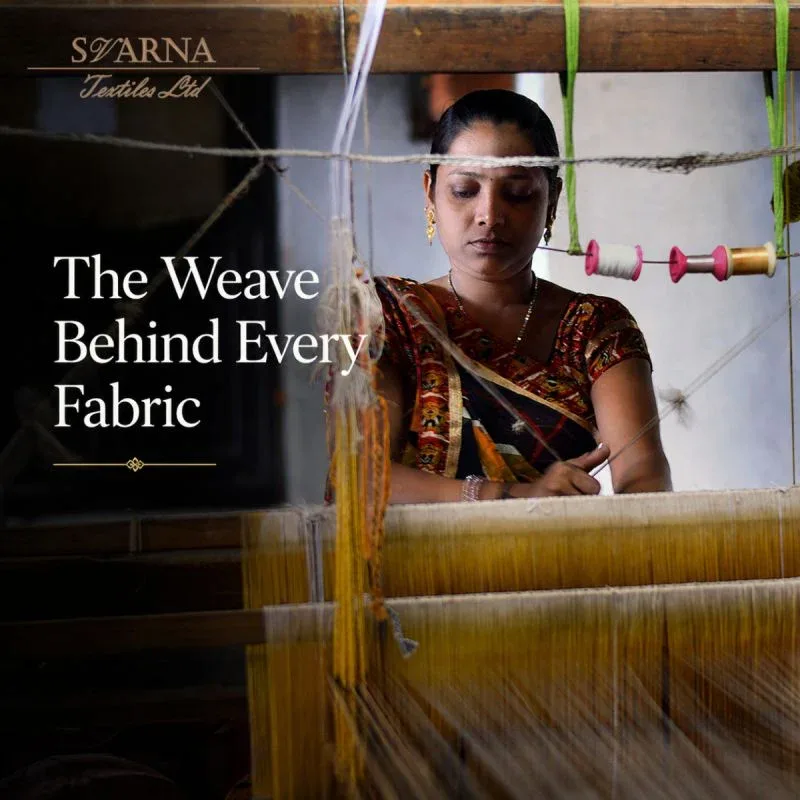
Craftsmanship from 500+ Handloom Weavers
Svarna works with a network of more than 500 handloom weavers, giving our in-house design team a wide range of weaves to play with, from plain khadi to dobby and textured constructions. Our quality control team is made up of skilled handloom weavers themselves, so every piece is checked by people who know the loom before it is dispatched.
Origin and Natural Sourcing
Based in Kolkata, West Bengal, since 2000, Svarna sources its textiles from the most rural parts of India, where spinning and weaving are living traditions. Our cotton is cultivated with minimal environmental impact and processed without harmful chemicals, with GOTS-certified organic options available. It is why we believe our handwoven range is among the best cotton fabrics in India for designers who value natural texture. Explore our khadi and cotton collections.
Trusted by brands in Japan and South Korea
Japan is Svarna’s longest-standing market, with more than 23 years of partnerships with labels such as Muji, Issey Miyake, Jurgen Lehl, Tomorrowland, and Stylem. Eriko Yamaguchi of Motherhouse, Tokyo, says Svarna’s experience and supplier connections across India help her team “develop new collections for our customers every season.” South Korean sustainable-fashion labels are now following Japan’s lead and turning to Indian handwoven textiles. As a cotton fabric exporter also shipping to Germany, Italy, the Netherlands, and the USA, Svarna offers low MOQs and fully custom orders.

Checklist for Choosing Khadi Fabric Manufacturers in India
Whichever khadi fabric manufacturers in India you shortlist, check them against these six points:
| What Buyers Need | How Svarna Delivers |
| Authentic handmade cloth | Charkha-spun yarn, woven on traditional handlooms. |
| Skilled workforce | A network of 500+ handloom weavers. |
| Natural sourcing | Rural Indian cotton; low-impact processing; GOTS-certified options. |
| Consistent quality | Weaver-led QC on every piece; Japanese quality standards. |
| Proven track record | 23+ years with Japanese brands such as Muji and Issey Miyake. |
| Flexibility | Low MOQ and 100% customizable fabrics. |
Table 2: Svarna at a glance for sourcing teams
Final Thoughts
Khadi connects ancient craft, India’s independence story, and today’s search for honest, low-impact clothing. At Svarna, that story begins with cotton and a weaver’s hands in rural India and ends in design studios in Tokyo and Seoul.
Ready to feel the difference? Order a Svarna swatch book ($20) or contact our team at export@svarna.com for a custom quote.
FAQs:
What is khadi fabric?
Khadi is cloth that is hand-spun and hand-woven, most often from cotton but also from silk or wool.
Is organic khadi cotton fabric good for summer?
Yes, organic khadi cotton fabric breathes well and absorbs sweat, so it stays cool in hot, humid weather.
Is khadi the best cotton fabric in India for sustainable fashion?
Many designers consider khadi the best cotton fabric in India for sustainable fashion because it is spun and woven by hand with very little electricity.
How do I choose reliable khadi fabric manufacturers in India?
Look for khadi fabric manufacturers in India with a skilled weaver network, low minimum order quantities, custom weaves, and strict quality checks, like Svarna.
Does Svarna work as a cotton fabric exporter to Japan and other countries?
Yes, Svarna is a Kolkata-based cotton fabric exporter and one of the sustainable fabric manufacturers India trusts, supplying brands in Japan, Germany, Italy, the Netherlands, and the USA since 2000.