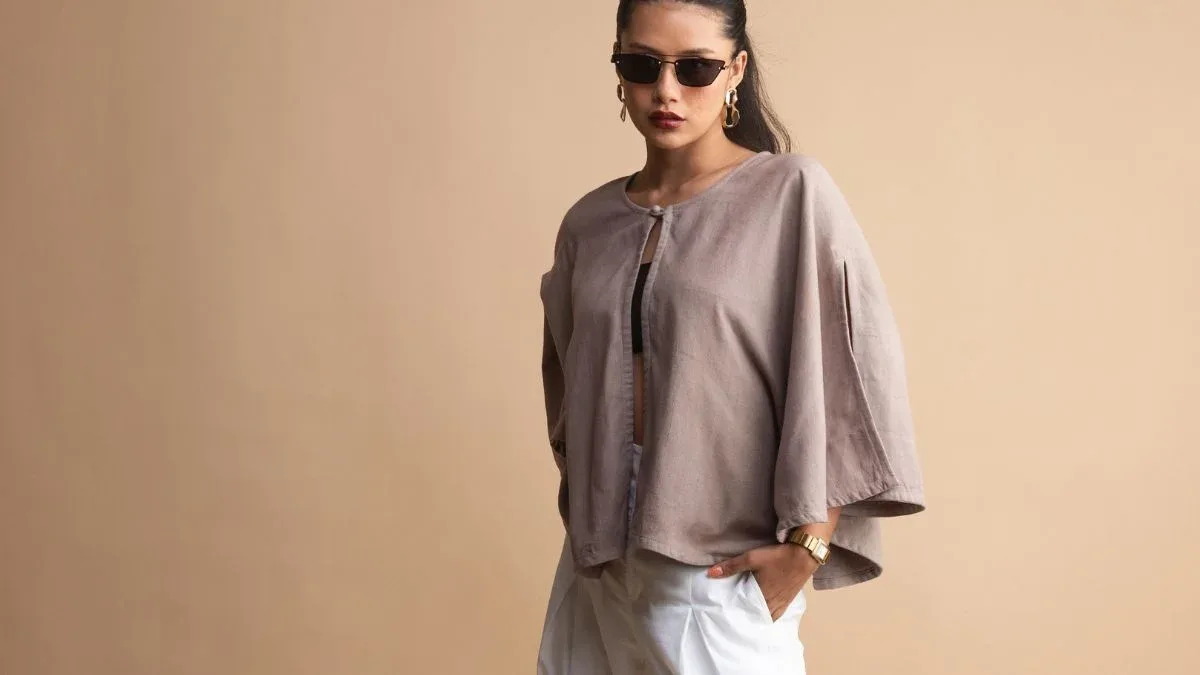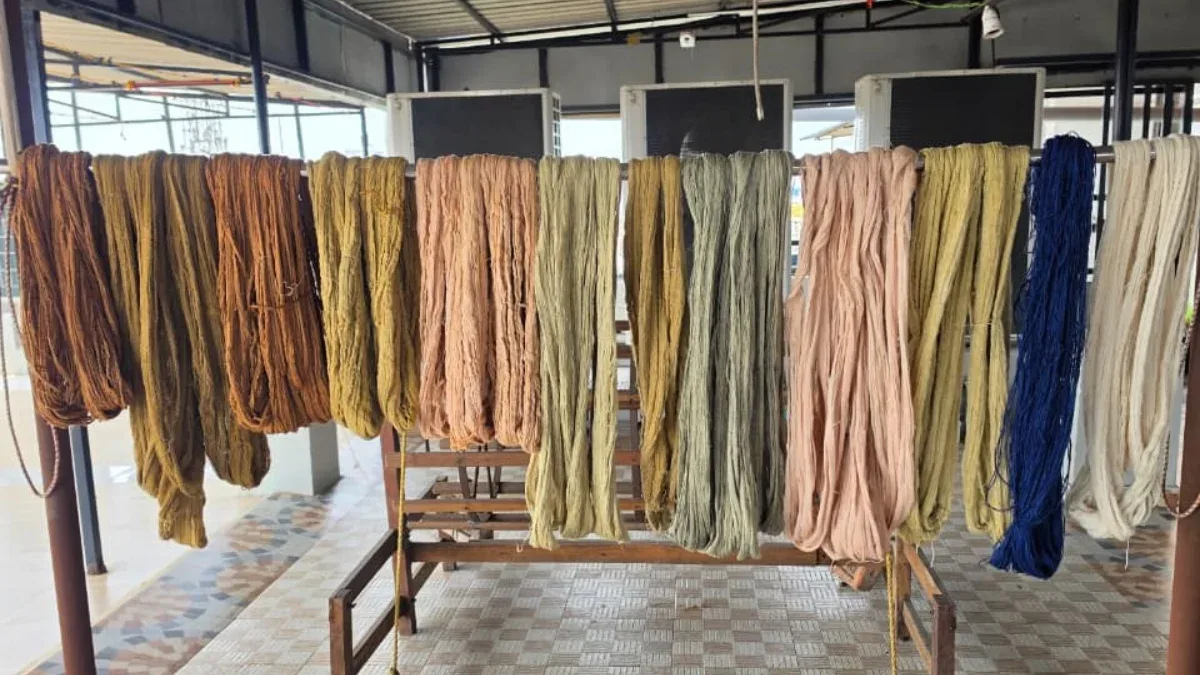
Japan’s biggest retail names shape what its buyers expect: Muji’s no-frills natural-fibre philosophy, Tomorrow land’s curated imports and stylists like Eriko Yamaguchi build looks around texture, not logos. AEPC has confirmed Japanese companies are actively looking to source from India’s textile sector. That interest only turns into repeat orders when a cotton fabric exporter can prove, shipment after shipment, that fabric meets Japanese standards, the gap Svarna Textiles is built to close.
→ See how Svarna Textiles fits the profile Japanese buyers are looking for.
Japan’s Textile Industry Is Actively Looking to India—How Svarna Is Positioned to Capture It
AEPC officials point to major names such as Uniqlo, Adastria, Toray, Daiso, YKK, and Pegasus already being in talks with Indian firms. Svarna has structured its operations around that scale of interest: a direct weaver network across Gujarat, West Bengal, and Assam for firm lead times; standing capacity for export-grade runs; a compliance desk tracking import documentation; and sample-to-bulk checks, so what a Tokyo buyer approves is what arrives in the container. This is the model behind every credible khadi fabric manufacturer in India, Svarna Textiles claims.
→ See how Svarna how it prepares shipments to meet Japanese compliance requirements.
The Numbers Behind the Opportunity—Where Svarna Fits the Gap
India’s garment exports to Japan stood at USD 234.5 million in 2024, against a Japanese apparel import market worth around USD 23 billion, roughly a 1% share of a USD 35 billion apparel economy. That 1% is a supply-chain gap, not a quality ceiling, and it’s the gap a scaling cotton fabric exporter like Svarna Textiles is built to close.
| Metric | Figure |
| India’s garment exports to Japan (2024) | USD 234.5 million |
| Japan’s total apparel imports (2024) | ~USD 23 billion |
| India’s current share of that market | ~1% |
| Size of Japan’s overall apparel market | USD 35 billion |
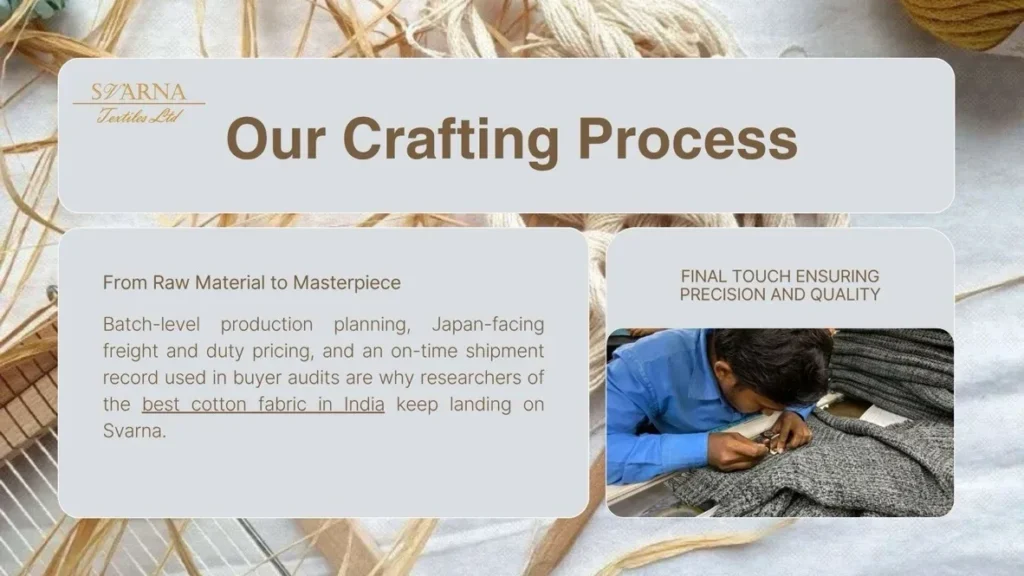
Batch-level production planning, Japan-facing freight and duty pricing, and an on-time shipment record used in buyer audits are why researchers of the best cotton fabric in India keep landing on Svarna.
→ See how Svarna is positioning for a bigger share of this market.
What Buyers Like Muji and Tomorrowland Actually Value — And How Svarna Delivers It
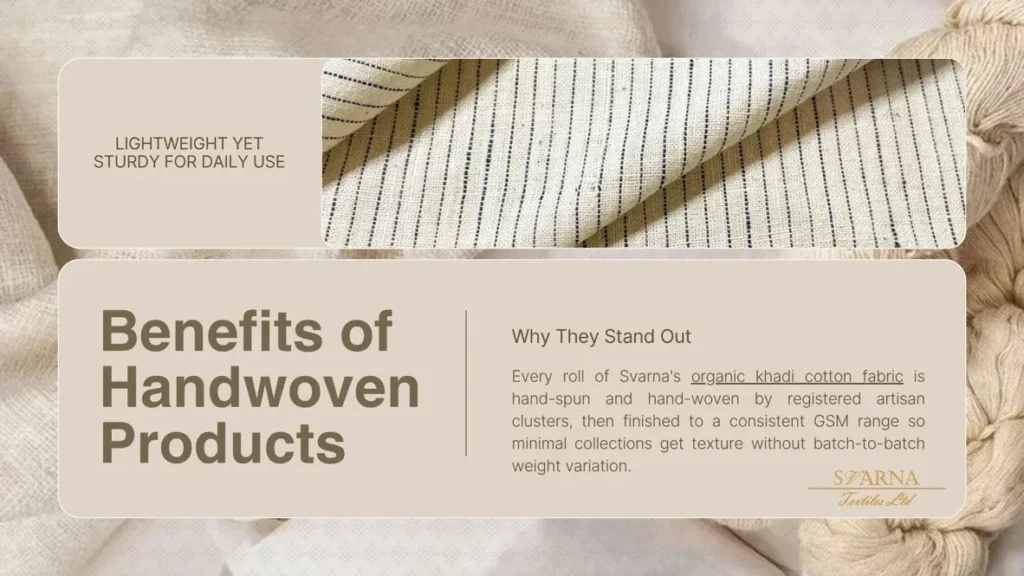
Retailers built around minimalism and stylists who work with texture rather than branding gravitate toward natural, hand-finished fabric — exactly what genuine khadi fabric manufacturers in India produce. Every roll of Svarna’s organic khadi cotton fabric is hand-spun and hand-woven by registered artisan clusters, then finished to a consistent GSM range so minimal collections get texture without batch-to-batch weight variation. Low-impact dyes are tested for colourfastness before dispatch, and documentation is pre-translated, cutting the weeks Japanese import teams usually lose to paperwork.
→ Request a sample of Svarna’s organic khadi cotton fabric to see the standard firsthand.
Building the Case for a Compliant, Documented Supplier — Svarna’s Documentation Stack
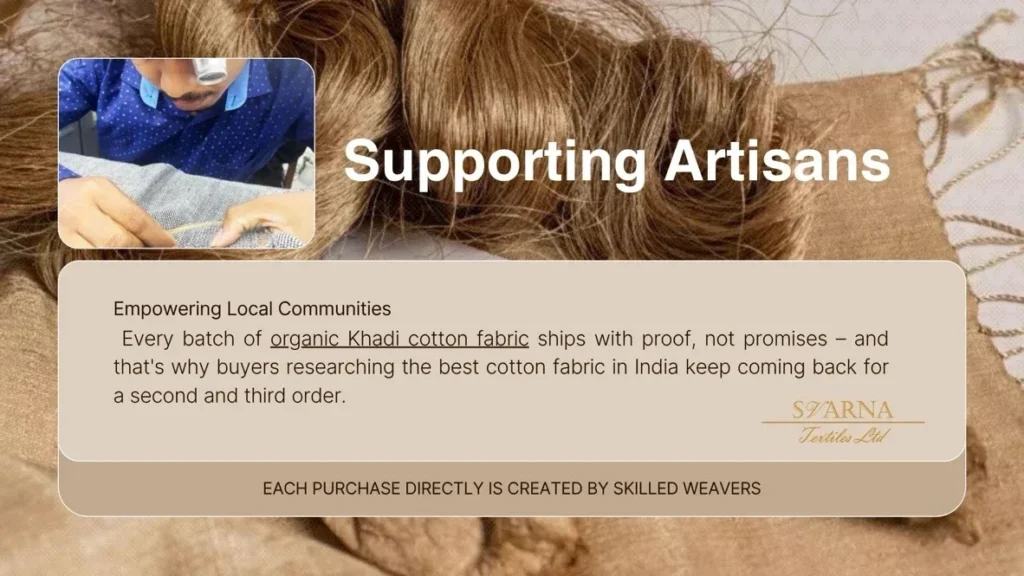
Svarna treats every order like an export audit, not a one-off sale. Weight and width reports are issued before packing, colourfastness certificates travel with every shipment, and traceability runs from weaver cluster to container. This is why every batch of organic Khadi cotton fabric ships with proof, not promises, and that’s why buyers researching the best cotton fabric in India keep coming back for a second and third order.
→ Compare Svarna’s samples against your current Japan-facing supplier. Request a sample today.
A Fuller Fiber Story—Cotton, Linen & Silk—Svarna’s Multi-Fibre Sourcing Network
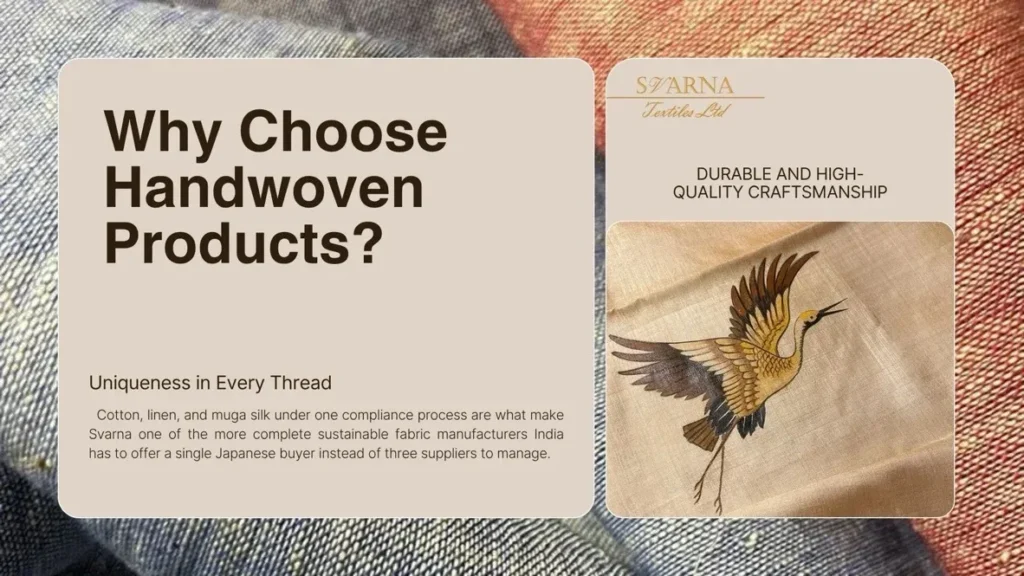
Minimalist Japanese collections rarely stop at cotton, so Svarna doesn’t either. As a linen fabric manufacturer in India, Svarna supplies washed, stone-finished linen sourced through a vetted network of linen manufacturers in India chosen for fibre quality over the lowest price. Alongside it sits muga silk fabric from Assam, a naturally golden silk sourced through established silk manufacturers in India with documented weaving lineage. Cotton, linen, and muga silk under one compliance process are what make Svarna one of the more complete sustainable fabric manufacturers India has to offer a single Japanese buyer instead of three suppliers to manage.
→ Ask about linen and muga silk samples for your next Japan-facing collection.
Where Svarna Textiles Fits In
Japan’s interest in Indian textiles is real and growing, but it goes to manufacturers who prove consistency. Artisan-level texture and mill-level documentation make Svarna one of the more dependable sustainable fabrics. manufacturers India currently offers.
→ Ready to talk sourcing? Ask Svarna for a certification pack today.
FAQS:
Does Svarna supply muga silk fabric in export volumes?
A: Yes—muga silk fabric from Assam scales from sample yardage to container-level orders.
How is Svarna different from other silk manufacturers in India?
A: Svarna works only with silk manufacturers in India offering documented lineage and third-party testing.
Can Svarna supply linen alongside cotton and silk?
A: Yes—as a linen fabric manufacturer in India backed by vetted linen manufacturers in India, Svarna covers all three fibres in one order.