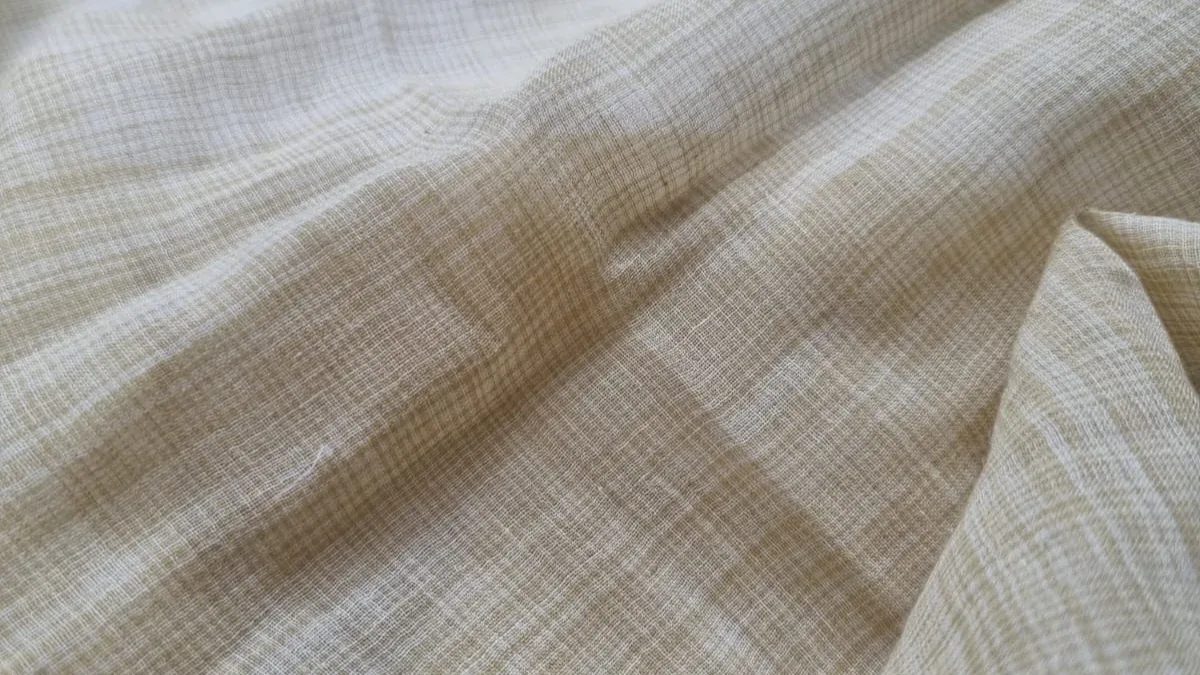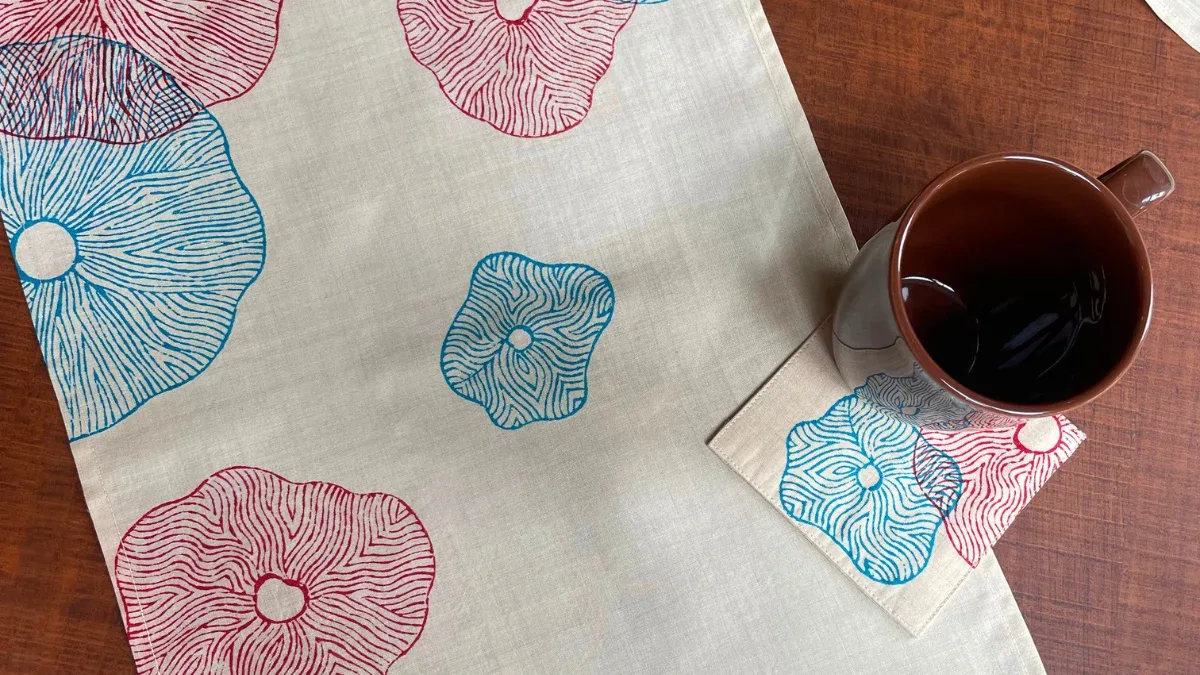
Khadi has become one of India’s biggest growing market stories, but on a national level it does not guarantee export standards. Moreover, Japanese buyers demand three factors, which are consistency, documentation, and durability that is maintained across all shipments, and not every khadi lael meets those requirements. That is the gap between volume and standard where Svarna Textiles has built its name among genuine khadi fabric manufacturers in India.
→ See how Svarna Textiles turns khadi heritage into export-ready fabric.
Khadi’s Historic Growth, By the Numbers
Provisional KVIC data for FY 2024-25 shows khadi turnover crossed Rs. 1.7 lakh crore for the first time in independent India’s history. Over 11 years, production grew 347% and sales climbed 447%, while employment rose nearly 49.23%, now supporting close to 1.94 crore people. Khadi Gramodyog Bhawan in New Delhi alone recorded sales above Rs. 110 crore.
→ Curious how these numbers translate to consistent yardage? Ask for a sample batch.
These numbers confirm domestic demand, but Japanese buyers look past turnover. They want fabric performing the same in batch one and batch five hundred—the standard Svarna Textiles builds every order around, whether it’s organic khadi cotton fabric or a blended export weave.
→ Request specs on our organic khadi cotton fabric range.
Why National Scale Doesn’t Guarantee Export Consistency
Much of India’s khadi output still tends to come from many small and locally centric workshops. This also signifies that the charm also showcases that the GSM, dye-lot matching and shrinking tolerance can differ from batch to batch consignments, which is easy for a domestic buyer, but in terms of Japanese partners, the consignment checks are usually on a tight schedule.
Here’s the gap side by side:
| Factor | Typical Khadi Workshop | Svarna Textiles |
| GSM & weave | Varies lot to lot | Checked before dispatch |
| Dye-lot matching | Manual, inconsistent | Colourfastness tested |
| Traceability | Often undocumented | Farm-to-loom records |
| Export paperwork | Assembled ad hoc | Standard compliance pack |
| Fibre range | Khadi cotton only | Cotton, linen & muga silk |
| Shrink tolerance | Rarely pre-tested | Tested to buyer spec |
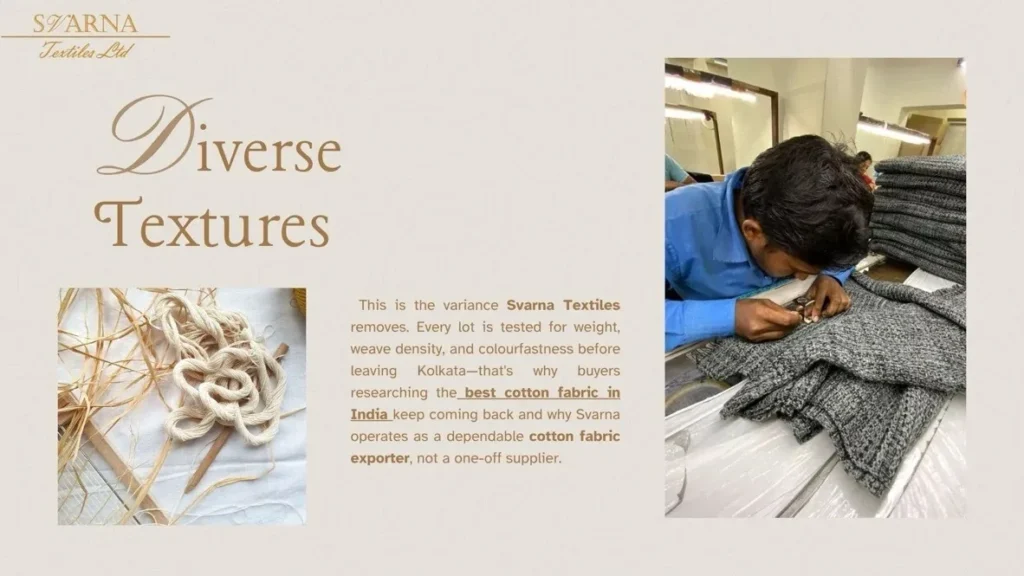
This is the variance Svarna Textiles removes. Every lot is tested for weight, weave density, and colourfastness before leaving Kolkata—that’s why buyers researching the best cotton fabric in India keep coming back and why Svarna operates as a dependable cotton fabric exporter, not a one-off supplier.
→ Compare our process against your current supplier’s.
What Japanese Buyers Actually Screen For
Khadi’s growing market share is often comprised of stronger marketing in order to improve the production capability, followed by rising awareness of the fabric’s natural benefits, which span around breathability, low processing by usage of chemicals and craftsmanship. Japanese buyers respond to those same qualities, but awareness alone doesn’t close a deal. They ask for traceability from farm to loom and test reports that back every claim.
→ Look through Svarna’s page on cotton and gain insight before your next shipment.
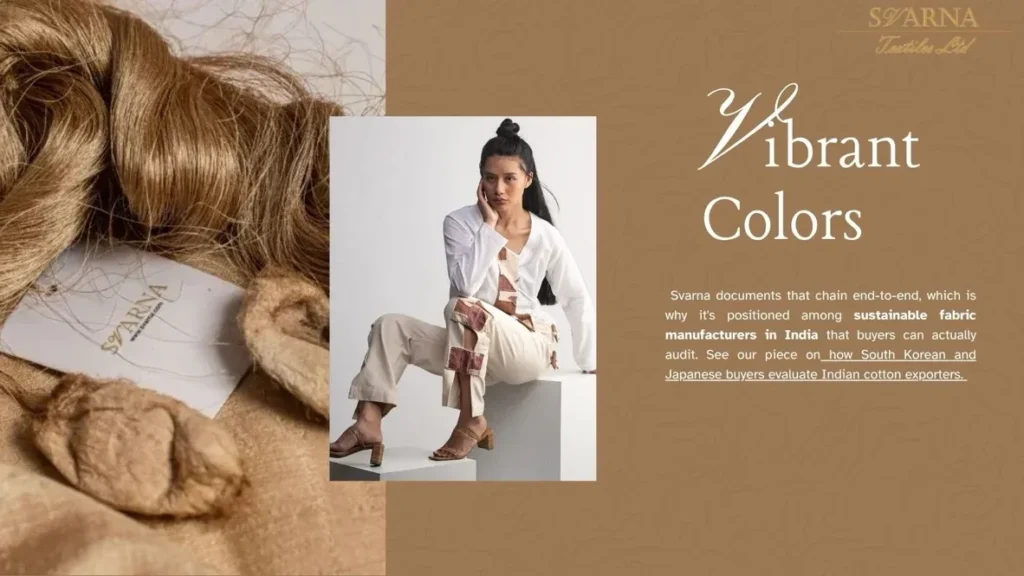
Svarna documents that chain end-to-end, which is why it’s positioned among sustainable fabric manufacturers in India that buyers can actually audit. See our piece on how South Korean and Japanese buyers evaluate Indian cotton exporters.
Beyond Khadi—A Fuller Natural Fiber Portfolio
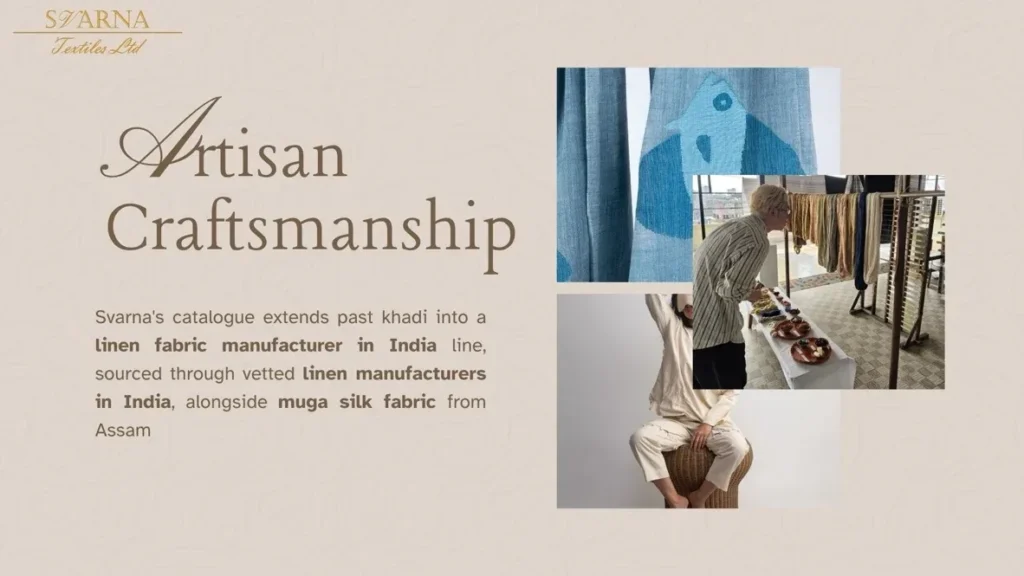
Japanese and Korean buyers rarely source one fibre; they build seasonal collections that mix textures. Svarna’s catalogue extends past khadi into a linen fabric manufacturer in India line, sourced through vetted linen manufacturers in India, alongside muga silk fabric from Assam. Partnering with established silk manufacturers in India gives buyers one accountable sourcing point. See how Kolkata’s handloom traditions reached Tokyo and Seoul.
→ Ask about our linen and muga silk swatch box.
Where Svarna Textiles Fits In
Khadi’s national numbers prove demand is real. What they don’t guarantee is that any manufacturer meets Japan’s expectations for documentation and low-impact processing. Svarna closes that gap — sourcing from the same Kolkata artisan networks, adding the testing and traceability export buyers require. See sustainable sourcing behind Kolkata looms reaching Japanese runways.
→ Ready to move forward? Ask for a swatch pack.
If you’re evaluating khadi fabric manufacturers in India for your next export order, Svarna Textiles is ready to share test reports and certification records.
Frequently Asked Questions
What makes organic khadi cotton fabric different from regular cotton?
It’s hand-spun and hand-woven from pesticide-free cotton, giving a looser weave and better breathability than machine-milled cotton. Svarna sources it from certified artisan clusters with traceable, chemical-free processing records.
Is Svarna Textiles a reliable cotton fabric exporter for Japanese brands?
Yes. Svarna handles batch testing, dye-lot consistency, and export documentation so buyers receive fabric matching sample specifications shipment after shipment—a key requirement for Japanese import partners.
Does Svarna work with linen manufacturers in India and silk manufacturers in India too?
Yes. Svarna’s network includes vetted linen manufacturers in India and silk manufacturers in India, including Assam’s muga silk fabric producers, alongside its khadi cotton lines—one partner, multiple fibres.